

Next.js vs WordPress vs Shopify — Which Is Right for Your Business?
WordPress, Shopify, or Next.js — three very different tools for very different needs. Here's an honest, jargon-free breakdown to help you choose the right platform before spending a rupee.

Bipul Dubey
Core Team
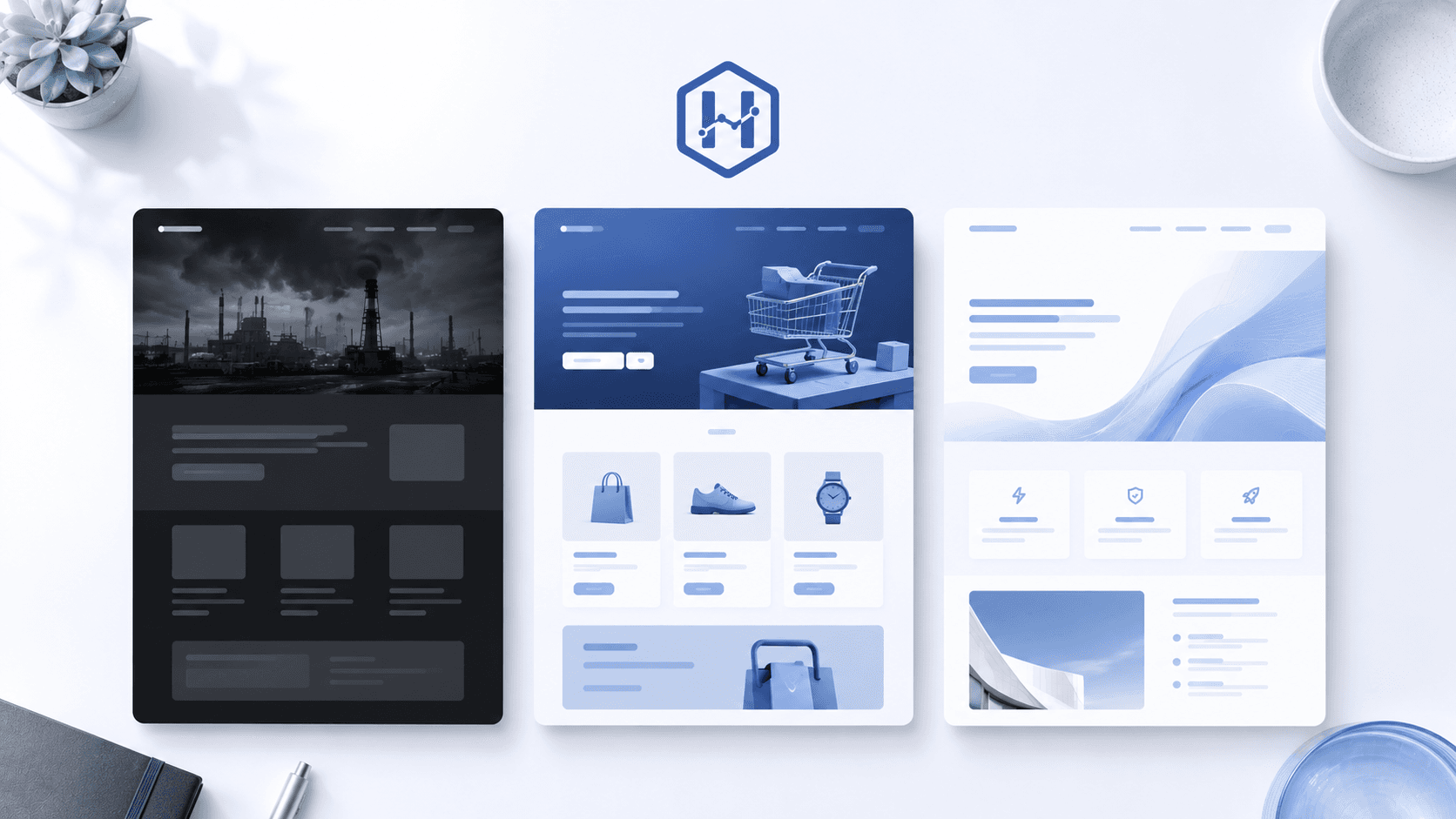
Next.js vs WordPress vs Shopify — Which Is Right for Your Business?
If you've been talking to web developers in Gorakhpur or searching online for website options, you've probably heard all three names — WordPress, Shopify, and Next.js.
Each one gets recommended confidently. Each one has genuine strengths. And each one is completely wrong for certain types of projects.
This post gives you an honest, no-jargon breakdown — so you can make the right decision before committing your budget.
Why the Platform Decision Matters
The platform your website is built on affects:
- How fast it loads — directly impacts Google ranking and bounce rate
- How much it costs — upfront build cost and ongoing monthly fees
- How easy it is to update — can you change content yourself or do you need a developer every time?
- How well it scales — will it handle 100 visitors or 100,000?
- How much you're locked in — can you move away from it if needed?
Choosing the wrong platform means either rebuilding in 2 years or living with limitations that hold your business back.
WordPress — The World's Most Popular, But Not Always the Best
WordPress powers over 40% of all websites on the internet. It's been around since 2003 and has a massive ecosystem of themes, plugins, and developers.
What WordPress is good for:
- Simple business or company websites
- Blogs and content-heavy sites
- Sites where the client wants to update content themselves
- Projects with a tight budget and no custom functionality needed
Where WordPress struggles:
- Speed — WordPress sites are notoriously slow out of the box. Getting a good Lighthouse score requires significant optimization effort and paid plugins
- Security — the most hacked CMS on the internet. Plugins and themes frequently introduce vulnerabilities
- Scalability — works fine for small traffic but struggles under heavy load without expensive hosting
- Custom functionality — anything beyond standard pages quickly becomes a workaround using plugins that conflict with each other
- Design limitations — most WordPress sites look like WordPress sites. True custom design requires significant effort
Cost in India:
| Item | Cost |
|---|---|
| Theme (premium) | ₹3,000 – ₹15,000 one time |
| Plugins (essential ones) | ₹5,000 – ₹20,000/year |
| Hosting (decent quality) | ₹5,000 – ₹15,000/year |
| Developer to set it up | ₹10,000 – ₹40,000 |
Note: Domain cost varies depending on the provider and the domain extension you choose (.com, .in, .co.in etc).
Best for: Local service businesses, blogs, coaching centres, or anyone who needs a basic web presence quickly and cheaply — and doesn't need anything custom.
Not ideal for: E-commerce with custom logic, SaaS platforms, high-traffic sites, or any business that cares deeply about performance and design quality.
Shopify — The Gold Standard for E-Commerce, Within Limits
Shopify is a dedicated e-commerce platform — built from the ground up to sell products online. If you want to run an online store, it's one of the most complete solutions available.
What Shopify is good for:
- Product-based businesses selling online
- D2C brands that want to launch quickly
- Stores that need inventory management, order tracking, and payment integration out of the box
- Businesses that want to manage their store without a developer
Where Shopify struggles:
- Monthly fees — Shopify charges ₹1,994 – ₹17,325/month depending on the plan, forever. This adds up significantly over 2–3 years
- Transaction fees — unless you use Shopify Payments (not available in India), you pay an additional 0.5%–2% on every transaction
- Customisation limits — deep customisation requires Shopify's own templating language (Liquid), which limits what's possible
- Not for non-e-commerce — if you want a showcase site, a blog, or a service business website, Shopify is overkill and unnecessarily expensive
- You don't own the platform — if Shopify changes pricing or policies, you're affected
Cost in India:
| Item | Cost |
|---|---|
| Basic Shopify plan | ~₹1,994/month |
| Theme (premium) | ₹10,000 – ₹25,000 one time |
| Apps (essential add-ons) | ₹2,000 – ₹10,000/month |
| Developer to customise | ₹20,000 – ₹80,000 |
| Payment gateway fees | 2%–3% per transaction (Razorpay etc.) |
Best for: Product-based businesses with a clear catalogue, D2C brands, or anyone who wants a managed e-commerce solution without building from scratch.
Not ideal for: Service businesses, custom web apps, or any business where the ongoing monthly cost doesn't make sense relative to revenue.
Next.js — The Modern Choice for Performance and Custom Builds
Next.js is a React-based web framework used by companies like Vercel, TikTok, Notion, and thousands of fast-growing startups. It's not a CMS or an e-commerce platform — it's a framework for building custom web applications and websites.
What Next.js is good for:
- Custom websites that need to be fast and SEO-optimised
- Web applications with user logins, dashboards, and complex functionality
- E-commerce sites that need more flexibility than Shopify allows
- SaaS products and internal business tools
- Any project where design, performance, and user experience are non-negotiable
Common concerns — and the honest answers:
- "I need to update content myself without a developer" — we solve this by building a custom admin portal into your project. You log in and update pages, products, or blog posts yourself — no developer needed after handover
- "I need it live in 3 days" — timeline depends on project scope. A simple showcase site can be delivered quickly. Complex projects take longer regardless of platform — that's true for WordPress too
- "I just need a simple blog" — Next.js is actually excellent for blogs and significantly outperforms WordPress on speed and SEO. With a built-in admin panel, you can write and publish posts yourself, just like any CMS
Cost in India:
| Item | Cost |
|---|---|
| Development (showcase site) | ₹10,000+ |
| Development (e-commerce) | ₹30,000+ |
| Development (web app) | ₹75,000+ |
| Hosting (Vercel serverless) | Free – ₹2,000/month |
| No monthly platform fees | ₹0 |
Best for: Businesses that want a fast, custom, scalable website or web application — built to their exact requirements without template limitations or ongoing platform fees.
Not ideal for: Anyone who needs a quick-and-cheap template site with no custom needs.
Side-by-Side Comparison
| WordPress | Shopify | Next.js | |
|---|---|---|---|
| Best use case | Simple sites, blogs | Online stores | Custom sites & apps |
| Page speed | Slow (needs optimization) | Medium | Fast |
| SEO | Good with plugins | Good | Excellent out of the box |
| Design freedom | Limited by theme | Limited by platform | Unlimited |
| Monthly fees | Low (hosting only) | ₹2,000 – ₹17,000 | Low (hosting only) |
| Scalability | Limited | Medium | High |
| Security | Weak (most hacked CMS) | Good (managed) | Strong |
| Custom functionality | Plugin-dependent | App-dependent | Fully custom |
| You own the code | Yes | No | Yes |
| Developer needed to update | No (basic updates) | No (products/orders) | Yes (content changes) |
Which One Fits Your Business?
You run a local service business (clinic, salon, coaching, gym)
→ Next.js showcase site — fast, SEO-optimised, looks professional, no ongoing platform fees. Starting from ₹10,000.
You sell products online and want to launch quickly
→ Shopify — if budget allows the monthly fee and you want a managed solution. Or a custom Next.js e-commerce site if you want no monthly fees and full control. Starting from ₹30,000.
You need a blog or simple company website on a tight budget
→ WordPress — acceptable if the project is simple and performance isn't critical. Expect ongoing plugin and hosting costs.
You're building a SaaS product, dashboard, or web application
→ Next.js only — WordPress and Shopify are not built for this. Full-stack development with a proper backend is the only right answer.
You're a D2C brand wanting full control over your storefront
→ Custom Next.js e-commerce — more upfront cost than Shopify, but no monthly platform fees, no transaction fees, and complete design freedom.
Why Hexment Builds on Next.js
Every website and web application we build at Hexment uses Next.js. Here's why:
- Performance first — Next.js sites load fast out of the box, which directly helps Google ranking
- Full-stack capable — the same framework handles the frontend UI and backend API, keeping your project clean and maintainable
- Serverless deployment — we deploy on Vercel's serverless infrastructure, which means your site scales automatically without expensive server management
- No template limitations — every project is built from scratch to your brand, not a theme someone else designed
- You own everything — the code, the design, the data. No platform lock-in
We don't use WordPress because most Gorakhpur businesses deserve better than slow, template-based sites that look like everyone else's. We don't push Shopify unless a client's specific situation makes it the right call.
We build what's right for your business — not what's easiest for us to sell.
Takeaway
WordPress is fine for simple, budget-first websites — but comes with speed and security trade-offs. Shopify is the right tool for product-based e-commerce — but the ongoing monthly fees add up fast. Next.js is the best choice for performance, custom design, and scalability — whether it's a showcase site, an e-commerce store, or a full web application. Before choosing a platform, ask your developer one question: "Are you recommending this because it's right for my business, or because it's easiest for you to build?" At Hexment, the answer is always the former. Get a free consultation →
Written by
Bipul Dubey
Core Team at Hexment
More Blog
VIEW ALL →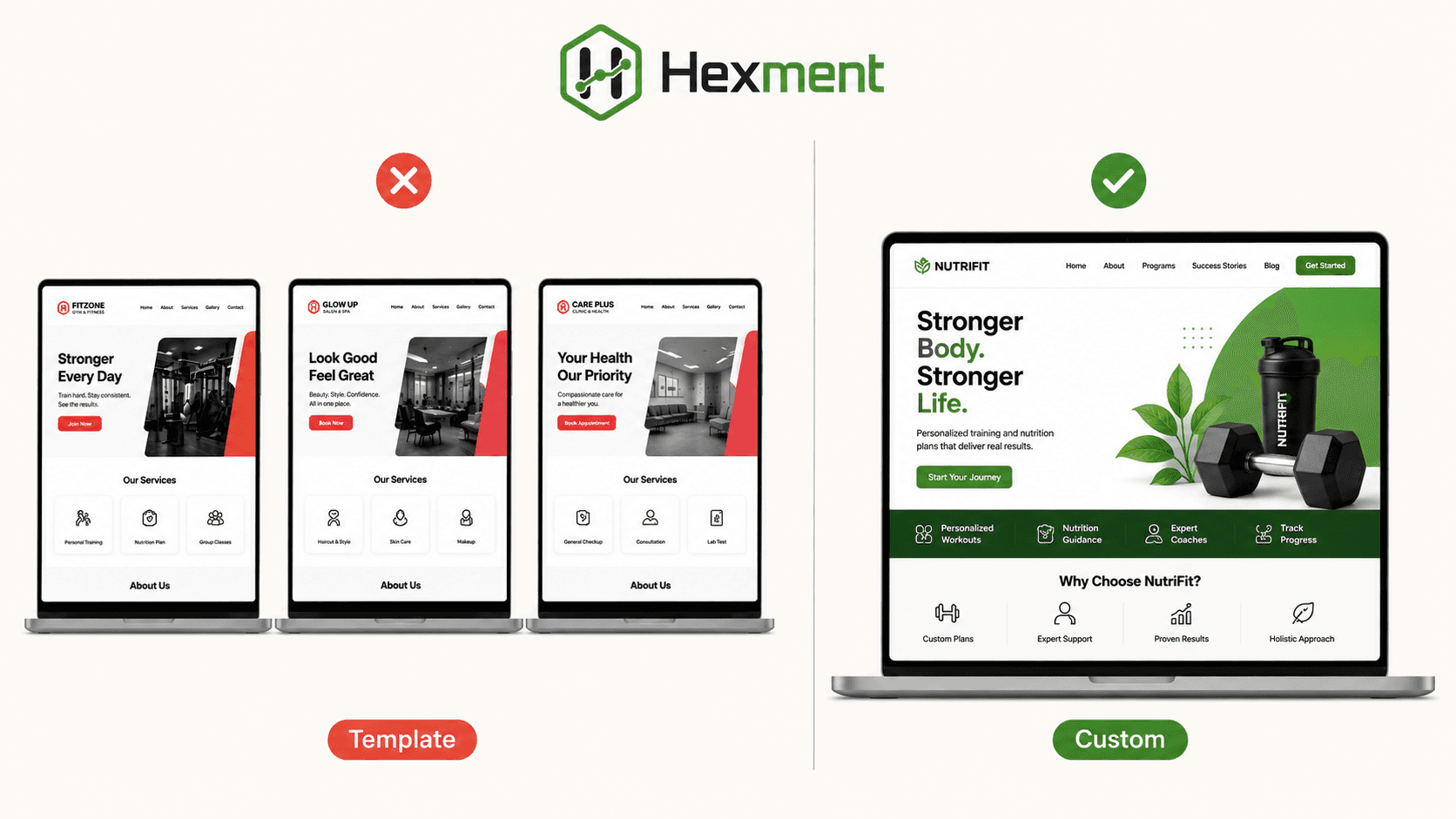
That "Affordable" Website Gives You the Same Template as Your Competitor
Jun 23, 2026 · 6 min read
React Native with Expo — The Fastest Way to Build & Deploy Mobile Apps for Small Businesses
Jun 14, 2026 · 8 min read
Why Every Gym, Spa & Local Business in Gorakhpur Needs a Website in 2026
Jun 11, 2026 · 6 min readReady to build something great?
Tell us what you need — web app development, mobile app development, or deployment. We'll get back to you within 24 hours.
